
Use the period that matters to the file
Start by defining the entity, jurisdiction, reporting period and records in scope. Use the company's actual reporting calendar. The phrase ‘before year-end’ is a planning prompt, not a claim that every company faces the same statutory deadline or that these five reviews are universally prescribed by law.
This resource complements ASHUR's existing tax-year and accounting guidance. It focuses on five record connections and the practical worksheet needed to review them. It does not repeat the legal analysis of assessment, objection or tax finality.
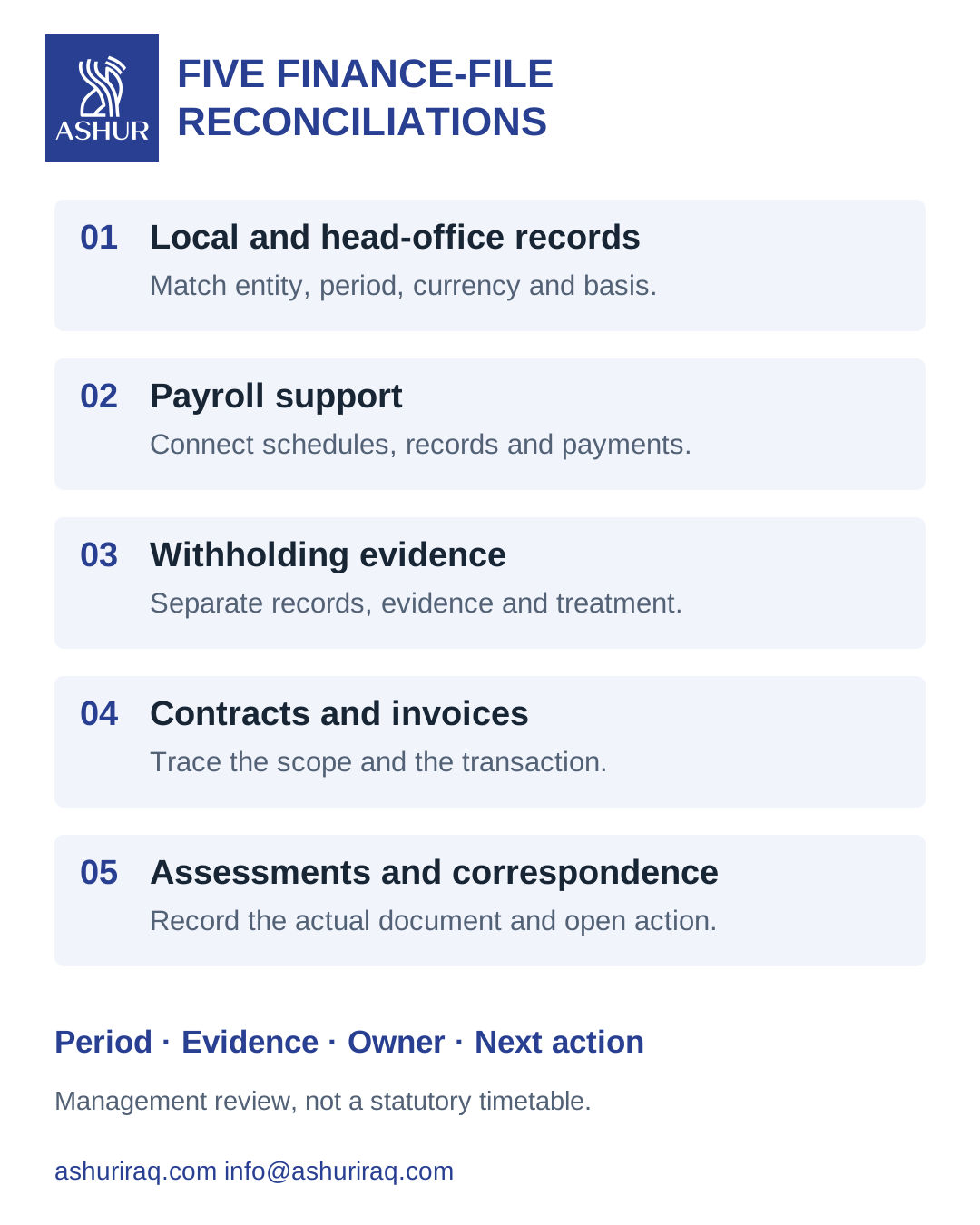
1. Local records and head-office schedules
Compare the relevant local ledger or trial balance with the head-office schedule on the same entity, period, currency and accounting basis. Identify opening balances, current-period movements and closing balances before explaining a difference.
Separate a timing difference, mapping difference, exchange-rate difference and proposed adjustment. Retain the calculation or source reference behind the explanation. A balancing entry should not replace the missing evidence, and a head-office allocation should not be treated as accepted for tax purposes merely because it appears in the accounts.
2. Payroll and its supporting records
Connect the payroll schedule to the personnel and payment records relevant to the period. Record changes such as starters, leavers, unpaid time or adjustments where they explain the recorded position. Identify any difference between the payroll summary, ledger, payment evidence and associated compliance schedule.
Assign employee-data questions to an authorised reviewer and keep personal documents in the company's controlled files. The worksheet needs an evidence reference, not passport copies, salary details or unnecessary personal data. Any employment, tax or social-security treatment requires its own applicable review.
3. Withholding records and evidence
For each material balance, connect the payer, contract or invoice, period and available withholding or deposit evidence. Distinguish what the accounting record says from what the supporting document establishes and from any documented authority treatment.
An amount labelled ‘withheld’ should not automatically be described as accepted, available for offset or recoverable. Record missing or inconsistent references as open questions. Obtain the appropriate factual and technical review before deciding the treatment.
4. Contracts, invoices and performance records
Map material invoices and adjustments to the relevant contract or order, counterparty and period. Where appropriate, connect them with delivery, service-performance or acceptance evidence. Identify variations, credit notes or scope changes that explain a mismatch.
The purpose is to make the transaction traceable. The presence of a contract and invoice does not by itself settle recognition, deductibility or regulatory treatment. Where the records leave those questions open, name the decision needed and the person responsible for obtaining it.
5. Assessments and correspondence
List the authority document or correspondence actually held, its date, the entity and period it covers, and what it records. Keep submissions, information requests, assessments, payments and closure-related documents distinct.
If a notice identifies an action or deadline, record the exact source and obtain timely specialist review. Do not generate an assumed legal date from this worksheet. An internal follow-up target is separate from a statutory, contractual or authority-notified deadline.
How to use the worksheet
The editable workbook contains a working register and a separate fictional example. For each review area, enter the period, recorded position, evidence reference, unresolved item, responsible person and next action. Add rows where one area has several independent questions.
Use short evidence identifiers that point to controlled records. Keep original documents outside this public template and restrict completed workbooks appropriately. Mark an item ‘Documented for this review’ only when the explanation and supporting record are present. That status does not mean a tax year is legally final or an authority has accepted a position.
A fictional example illustrates the distinction: a local schedule and a head-office schedule use different period cut-offs. The action is to obtain a period bridge and review the remaining difference. It is not to force the two balances to agree or to assume one is wrong.
Finish with a short decision record
At the review meeting, separate items supported for the defined purpose, questions awaiting records and matters requiring a technical decision. For each open item, state what is needed next and who owns that action. Preserve the date and basis of the review so the next reviewer can follow it.
ASHUR's Accounting & Bookkeeping, Corporate Tax and Tax Controversy services can support a scoped review of accounting records, evidence and unresolved questions. Begin with a non-confidential summary of the entities, periods and issue types. Do not send sensitive supporting documents with the initial enquiry.
Related guidance
General management-review resource. It sets no universal statutory deadline and does not determine legal or tax treatment. Apply the relevant jurisdiction, period, contracts and current official requirements with qualified advice where needed.
Sources and review
Published 22 November 2026 · research reviewed 22 November 2026. No named legal reviewer or professional sign-off is asserted.
- Filed Is Not Final — reviewed 2026-11-22.